
Mental Health Support
Mental Health Initiative Departments:

Counseling

Continuing Education for Counselors, with a focus on PwDs

Awareness, Advocacy, and Guidance
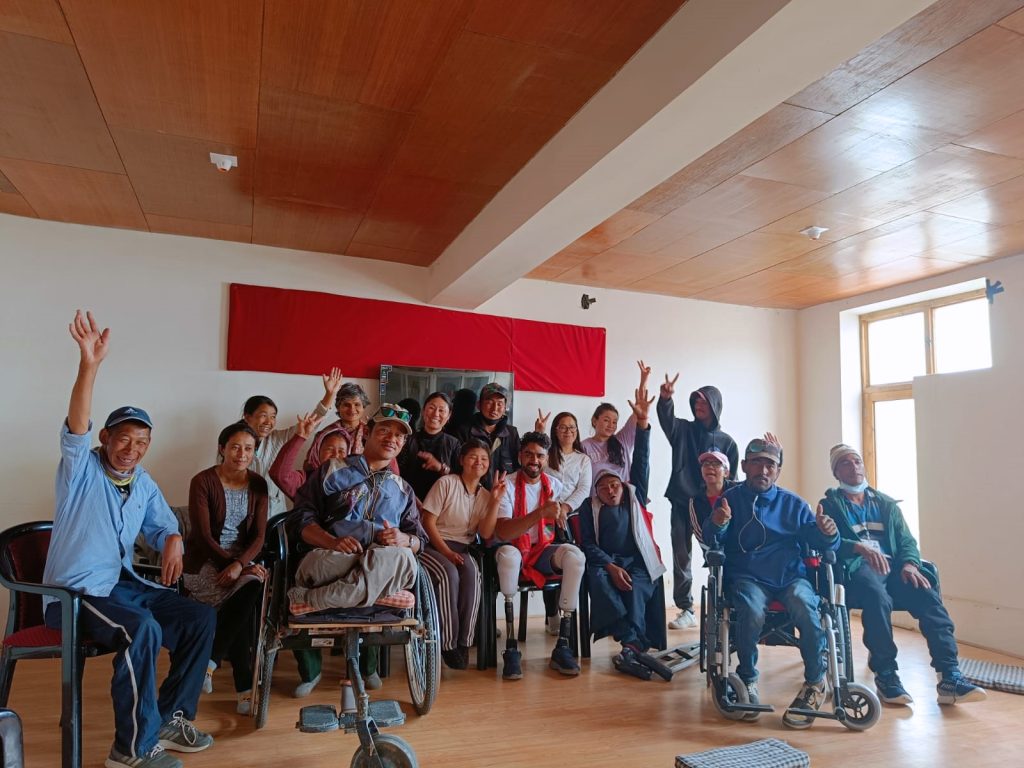
The Tinkesh Ability Foundation Mental Health Initiative was created with the aim to encourage and provide a more inclusive, empowering, and empathetic space for people with disabilities. We intend to help individuals heal, overcome the obstacles before them, and create a healthy, safe, and comfortable life for themselves.
The question that comes to mind is, why such a big focus on mental health? So, here are some facts and data from studies done in recent years.
- In a study regarding the psychological consequences in patients with amputation of a limb, the researchers found certain shared experiences across their population, i.e. an increase in anxiety, anger and hostility, higher chances of depression, social withdrawal, helplessness, and more including the various physical, medical, and interpersonal challenges that arise. Simply confirming the need for increased mental health support (Rosca, Baciu, Burtaverde, & Matezier, 2021).
- In the book, Professional Counselor’s Desk Reference, it is stated that people with disabilities more often endorse psychosocial issues as their biggest barriers, as opposed to their physical barriers (Narinin & Stebnicki, 2008).
- Keller and Galgay were the original researchers to identify the ableist microaggressions faced by individuals with disabilities. However, in a more recent study by Hayward, Abbene, & VanHeel (2019), it was found that apart from the 10 existing forms of microaggressions faced by PwDs, 2 more emerged when working with people with invisible disabilities, symptoms not being believed, and disabilities being discounted due to “looking healthy or young”.
The information listed above helps us clearly identify the growing need for psychosocial support among people with disabilities, regardless of the nature of the disability. Social isolation, feeling othered, and struggling to maintain relationships are an unfortunate reality for PwDs. TAF has been created with the goal to address these issues and create a system that allows individuals to access mental healthcare and other necessary support.
To address it effectively it is important to provide extremely empathetic and expert help, and at TAF, we will provide awareness, guidance, and support for people with disabilities through counseling, raising awareness, and encouraging self-advocacy in all spaces. Counseling can help individuals overcome symptoms of depression or other mental health challenges, begin their journey through grief, empower individuals towards acceptance, and create systems that allow individuals to have the life they wish to have.
In keeping with these goals, TAF wishes to offer the following:
- Help people who recently underwent amputations, suffered major life-changing injuries, were diagnosed with a chronic illness, and/or lost vision or hearing, and have gone through a massive change in a short period of time cope with these changes in sustainable and non-damaging ways.
- Increase awareness regarding one’s identity as a PwD, enabling acceptance and empowering individuals to develop systems and a life better suited to their needs.
- Provide support, guidance, and awareness for caregivers, and tackle situations such as caregiver’s fatigue, or hostility within the family due to a lack of understanding or awareness.
- Enable understanding, patience, and acceptance for one’s support needs, accommodations, and limitations, while promoting growth in accessible and viable spaces.
- Encourage self-advocacy and representation, and removing the taboo surrounding one’s perspective of themselves as a PwD, and enabling slow transitions to new routines and systems to promote independence in plausible aspects of their lives. (not telling someone who can faint 20 times a day to live alone and figure it out)
- Offer resources, expert consultations, or seminars to help individuals regain important functional skills, learn to manage their disability, and ensure education regarding their rights, access, and facilities.
The value and importance of the various forms of psychological counseling and therapy are undeniable. As the world continues to expand at massive rates, enabling individuals to recover, heal, rehabilitate, and move forward is imperative. Counseling includes working with individuals, families, and groups. We aim to help PwDs and their caretakers access the care that is necessary for them to create and maintain a higher quality of life. Often developing a disability, or suddenly being faced with a new and significant change to one’s body, lifestyle, career opportunities, bandwidth, and relationships can be extremely jarring, leading to challenges with substance abuse, long-lasting grief and its impact on functioning, major shifts in professional and social lives, and the need for new systems and dynamics individually and within existing relationships.
Individual Therapy
By encouraging individuals to seek and continue counseling with our TAF team of counselors, we intend to empower clients to reclaim and reestablish the life they aim for, while accommodating their needs, and identifying the best way forward. Helping individuals identify room for growth and change, or gain the support they need, or even have a professional acknowledge their struggle and the effort they make on a daily basis is what we hope to do. The positive and lasting impact of a good therapist and well-managed process cannot be ignored.
Family Therapy
With family therapy, the aim is to help family members and units to understand the impact of the disability, or the recent events to those that care for and assist PwDs. This includes helping the family identify and process their struggles surrounding the existing circumstances, and enabling all parties to have their needs met, while maintaining clear understanding, communication, and cooperation between all members. Although it is important to note these processes are neither easy nor short-term commitments, an equally important fact is that they can lead to transformative change and improve the lives of all parties involved.
Group Therapy
Being an individual with a disability is often an isolating and incredibly lonely experience. Group therapy not only helps people reflect with the help of others, grow from others’ experiences, gain new perspectives, and enable better communication, it most prominently helps group members witness and acknowledge the fact that they are not alone in their struggles. Facing an often challenging world that rarely makes space for those with different experiences and lives, group therapy can help individuals learn about themselves, and achieve their therapeutic goals while simultaneously feeling a sense of community, and finding others that share similar experiences and challenges.
This would include support groups for various groups of individuals, such as amputees, people with visual impairments, individuals with chronic pain, and other groups that can benefit from a safe, supportive, non-counselling based space to speak about their experiences, feel seen, and feel validated.
TAF was created with the aim to expand the range and variety of support that is currently being offered to PwDs across the country. While social and physical support are two of our biggest targets, mental support is an equally significant goal for our organization, and we intend to provide the best.
Awareness, Advocacy, and Guidance
There is a noticeable lack of awareness regarding the varying kinds of disabilities, support needs, mobility aids, accessibility, and social impact of living with a disability across spaces, platforms, and conversations. This gaping gap in information is present across industries as well, the mental health field, medical field and healthcare, political conversation, educational organizations are some such major examples. Understandably, when a group of people are often left out of the discourse surrounding significant decisions, governance, legal and infrastructural development, and well-funded medical and psychological research, the results are dissatisfactory, exclusionary, and limited. This directly translates to a lack of safety, opportunity, support, and care for people with disabilities, and TAF wishes to tackle this challenge in three ways.
Awareness
Raising awareness is crucial to the growth and development of an inclusive and well-informed country. This initiative will involve conducting surveys, workshops, and seminars in various settings. Public schools and spaces, individuals who wish to learn and gain more information, and major organizations will be introduced to important points of discussion required to create inclusive and accessible spaces. We intend to invite experts in their respective fields to speak about the interaction between their world and the need for inclusivity. Pamphlets, posters, and social media will equally contribute to this purpose, potentially creating material to be circulated among social circles to increase awareness from home itself.
Advocacy
In spaces and systems often built without accounting for the accessibility needs, support needs, or mobility needs of individuals with disabilities it is imperative to initiate and encourage advocacy. This can include informing human resources officials of the requirements that must be met by their organization and encouraging them to initiate change, discussing with teachers and parents alike about the ways in which schools and homes can be made more conducive and supportive for children with disabilities, or discussing the limitations or challenges faced by PwDs in medical spaces with a range of medical professionals. It is important for change makers to step forward, advocate for change, and see it through if need be. By providing the necessary information, providing non-disabled people, and people in power with clarity regarding the bare necessities that must be in place to create inclusive and accessible spaces, TAF intends to start waves of change.
Guidance
As challenging as it may often get, it is crucial for PwDs to advocate for themselves. Although it often feels unfair and limiting, and it can be a rather exhausting process to consistently request or demand accommodations for one’s needs, it is important for individuals to realize and acknowledge that having their support needs met is a justified expectation, and the least one deserves from their environment and their peers. Guiding self-advocacy, teaching assertiveness, helping PwDs gain the communication skills and information needed to ensure they are accounted for and respected is the main goal of this initiative.
Continuing Education for Counselors
Psychology is still a growing field in India, and there is a noticeable gap in information, resources, and education when it comes to providing therapy and mental healthcare for people with disabilities. There is a need for one to step away from the rigid limitations of earlier systems, account for the impact of one’s social life, surroundings, systems in place, and experiences to provide well-informed and genuinely effective therapy. To ensure that individuals who choose to seek counseling through TAF are being provided the highest quality care and that our team of counselors is equipped to manage cases of varying degrees, we will be conducting webinars, workshops, and psychoeducation groups. These will include hearing from individuals with personal experiences within the field of psychology and the challenges they faced when attempting to seek support, guidance from professionals in their respective fields, experienced psychologists with expertise in disability therapy, and other important contributors.
Additionally, over the course of time, TAF intends to coordinate with various providers for courses, workshops and certifications, to help counselors gain more skills within the capacity of their schedule and willingness to invest in skill acquisition. This can include online courses for sign-language, introductory courses on recent developments within psychology and counseling, and other certifications.
Get in touch
Archives
Categories
- No categories
Categories
- No categories